Places to Visit

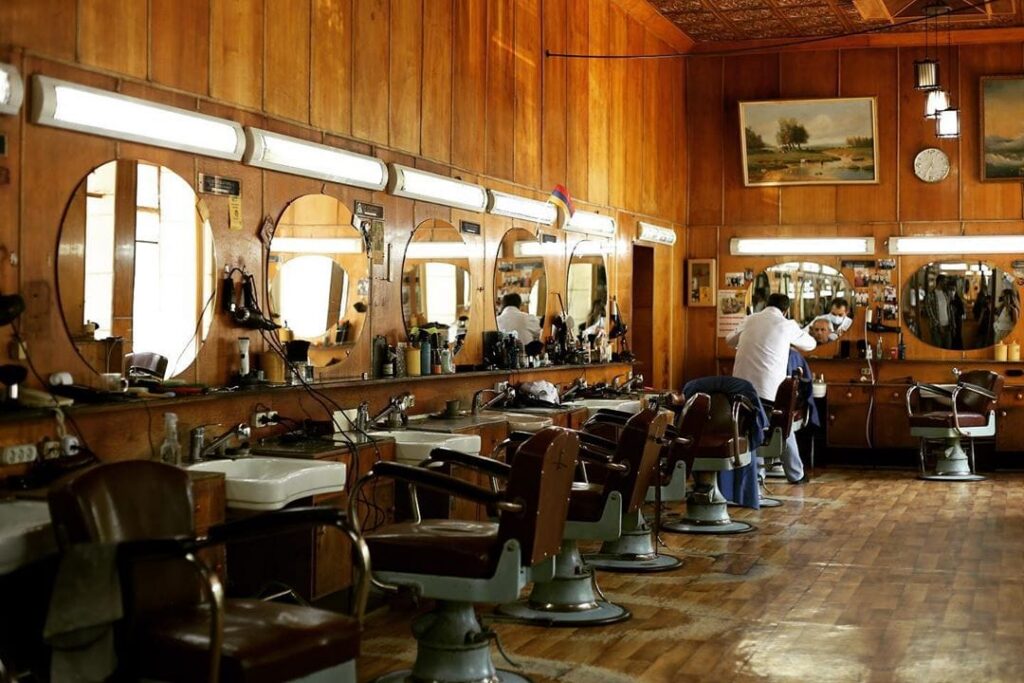
The “Lux” Barbershop

The “Lux” Barbershop

The “Lux” Barbershop in Gyumri is one of the city’s oldest and most well-known barbershops, often considered among the first of its kind. Founded in 1941, it has preserved its unique atmosphere to this day. Over the years, the barbershop has served not only as a place for grooming but also as a social hub where people gathered, talked, and shared news. It has become an important part of Gyumri’s urban culture, reflecting traditional barbering practices. The barbershop stands out with its retro interior, featuring vintage chairs, mirrors, and tools that create a distinctive environment, transporting visitors back to mid-20th century Gyumri. Today, it remains an interesting stop for both locals and tourists, offering a glimpse into the city’s everyday cultural life.
Good Morning Building

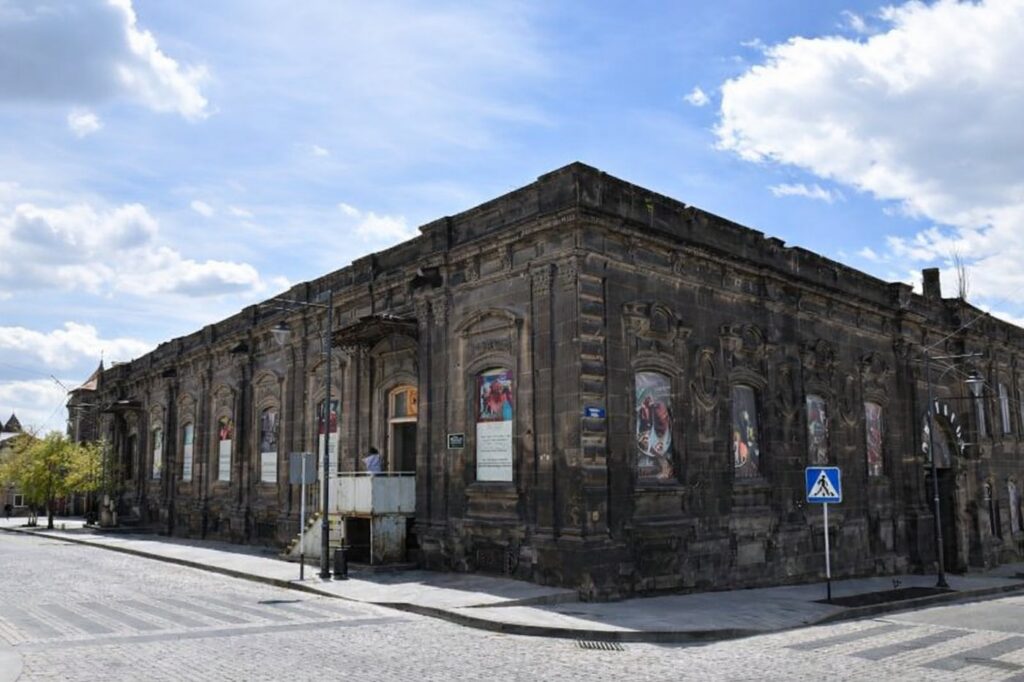
Good Morning Building

The “Good Morning Building” in Gyumri, located at 30 Gorky Street, was built in the late 19th century (around 1880–1900) by order of Grigor Drampyan and later belonged to Nikoghayos Drampyan. The Drampyan family, originally from Erzurum, was known in Alexandropol for its wealth and philanthropic activities. Constructed from black tuff stone, the building is notable for its balanced architectural design and served as both a residential and income-generating property. It features a traditional inner courtyard surrounded by a wooden balcony with decorative elements. Over time, the building has had various functions, including housing the “Gyumri” restaurant, and during certain periods, its arched halls were used as a detention facility. The building is known as the “Good Morning Building,” a name associated with the decorative elements on its northern façade, which resemble everyday morning items such as a mirror and a towel. According to another popular version, the Drampyans, known for their charitable mindset, placed a mirror, razor, soap, and towels outside the building each morning so that passersby could wash and prepare for their day. This tradition is believed to have inspired the building’s name.

Khachkar Park Gyumri

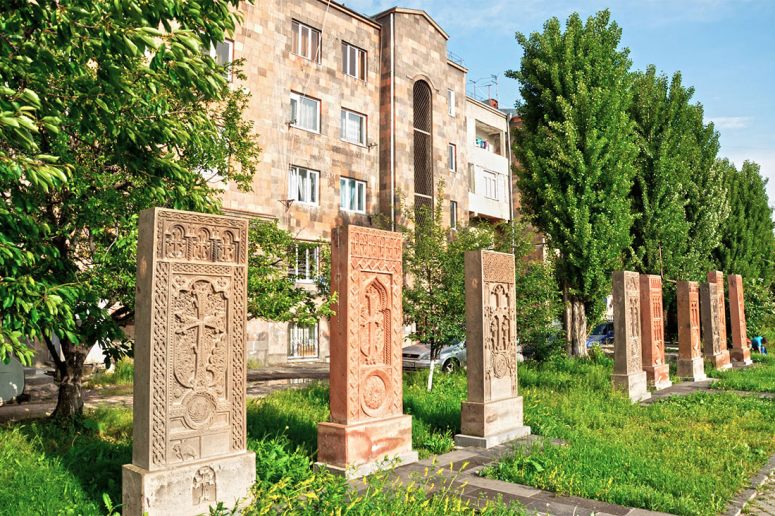
Khachkar Park Gyumri

Right after crossing the street from Vardanants Square, visitors find themselves in the Khachkar Park. It was established in 2010 next to the Holy Savior Church. The park features carved stone khachkars, whose main element is the cross. They are often adorned with geometric ornaments, eternity symbols, as well as plant and animal motifs. Khachkars are a distinctive element of medieval Armenian Christian art and carry deep cultural and spiritual significance.

Harichavank

Harichavank

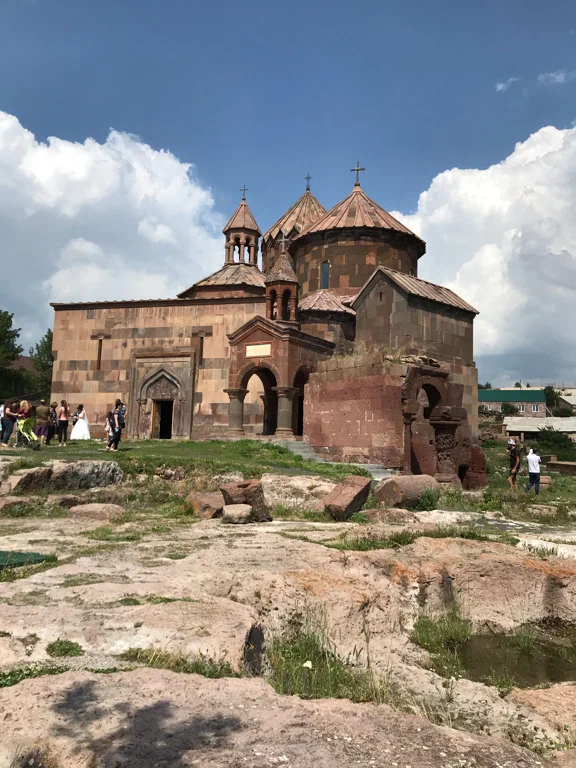
Harichavank (also known as Harich Monastery) is one of Armenia's oldest medieval monastic complexes, dating from the 7th to 13th centuries. Located in Harich village, Shirak Province, on a cape formed by ravines at the northern slope of Mount Aragats (about 22 km from Gyumri). The complex features two main churches (St. Gregory from the 7th century and St. Astvatsatsin from 1201), a gavit, cemetery, and other structures. Rebuilt by the Zakaryan princes (Ivane and Zakare) in the 13th century on the site of an older temple, it served as a royal summer residence, renowned school, and scriptorium. Today it is well-preserved, a peaceful tourist spot with stunning views of Aragats and the surrounding landscape.

Marmashen Monastery

Marmashen Monastery

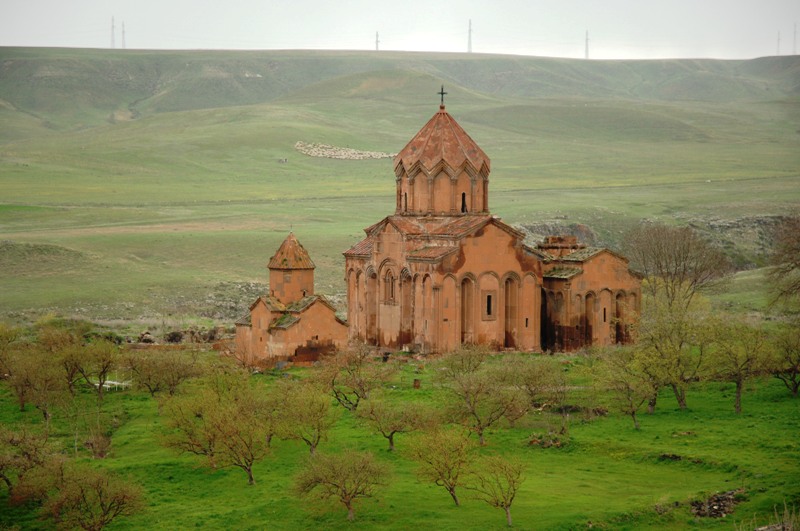
Marmashen Monastery is a 10th-century Armenian monastic complex and one of the finest examples of the Ani school of architecture. Located about 2 km northwest of Marmashen village (or south-west of Vahramaberd) in Shirak Province, on the left bank of the Akhuryan River in a scenic gorge surrounded by apple orchards. Built between 988–1029 under Prince Vahram Pahlavuni of the Pahlavuni family. The complex includes five churches, a gavit (narthex), and other structures. It served as an important religious and cultural center during the Bagratid Kingdom of Ani, was restored in the 13th century by the Zakaryans, repaired in the 19th–20th centuries, and re-consecrated by Catholicos Karekin II in 2003. Famous for its elegant design, intricate carvings, and stunning views over the Akhuryan River.

Gyumrik

Gyumrik

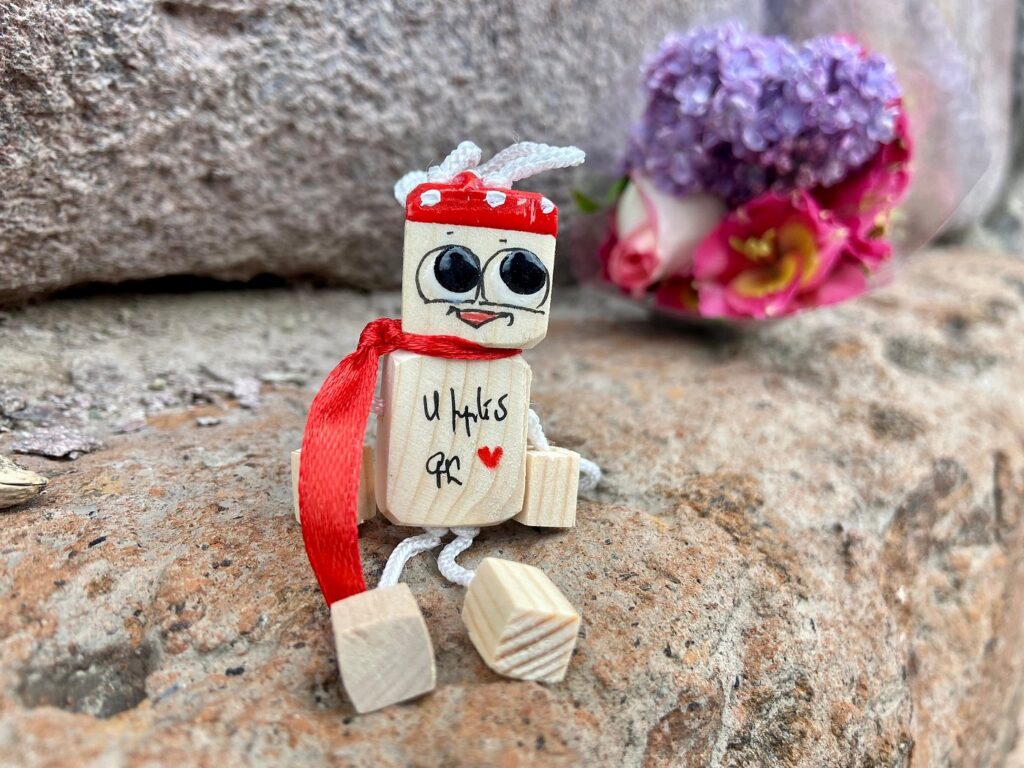
Gyumriks are the symbol of Gyumri. It is a unique wooden toy created by Arsen Vardanyan and Syuzanna Igityan to bring smiles to the whole world. The price is symbolic only 1000 drams. The co-authors decided to sell it at a low price to prove that good things don’t always have to be expensive and that happiness can truly be found in the little things.

B612 Art Gallery

B612 Art Gallery

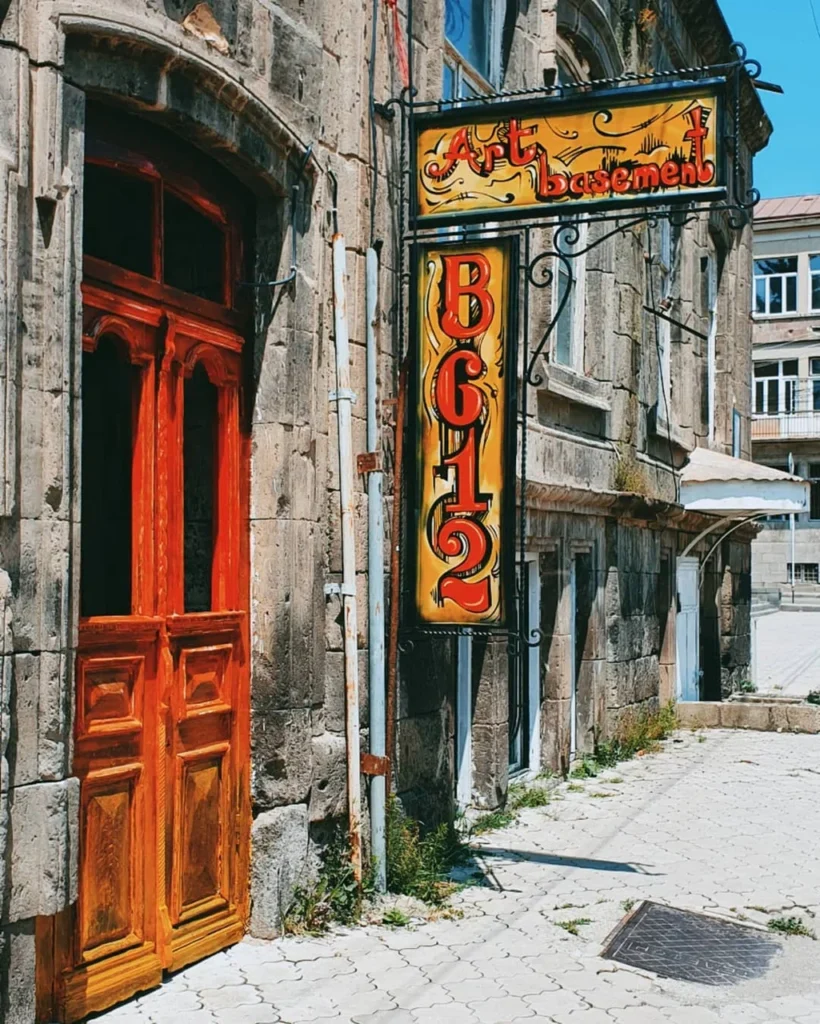
B612 Art Place is one of Gyumri's central art spaces, opened in 2018 as a private gallery and studio. It showcases and sells works by contemporary Armenian artists: paintings, sculptures, jewelry, ceramics, and other handmade items. The venue brings together local creators, regularly hosts exhibitions and sales, and forms a key part of the artistic hub on Rustaveli Street the heart of street art and craft in Gyumri. It's an ideal spot for art lovers, tourists, and souvenir hunters, with a welcoming atmosphere and exclusive pieces.

Leo Art Studio

Leo Art Studio

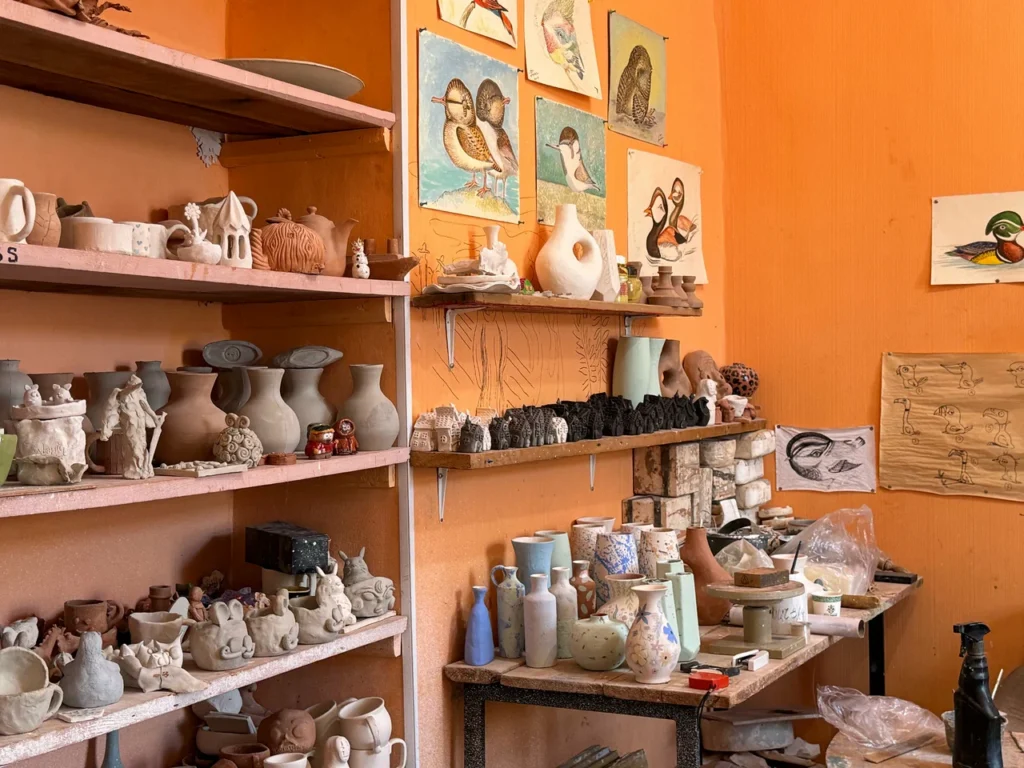
One of the most famous ceramics and art studios in Gyumri, focused on pottery, handmade items, and works by local artists. It is not only a workshop but also a showroom where you can buy handmade dishes, vases, figurines, and watch the creative process. The studio brings together Gyumri-based artists in one place and often collaborates with other craft makers (for example, Mia Kaus’s handmade frogs).

Vardan Mamikonyan Monument

Vardan Mamikonyan Monument

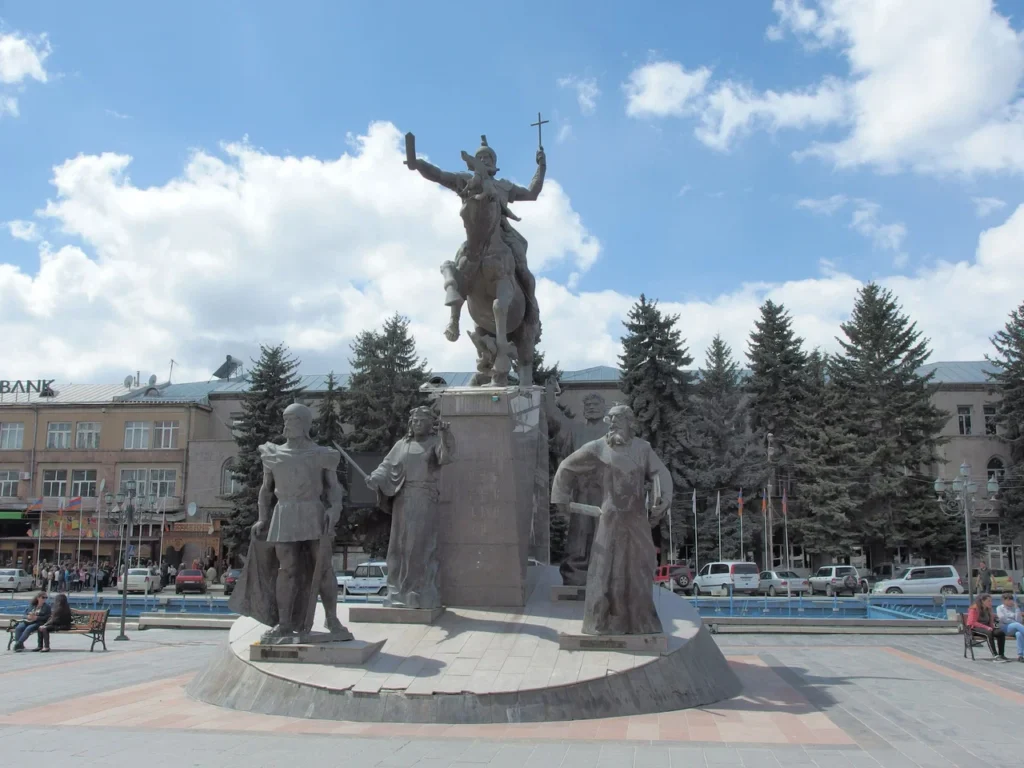
The equestrian statue of Vardan Mamikonyan is one of Gyumri's most powerful and inspiring symbols, towering over Vardanants Square. Created by sculptor Artush Papoyan and installed in 2008, it depicts the Armenian Sparapet (Commander-in-Chief) at a decisive moment during the Battle of Avarayr. The monument stands out for its dynamism and strength, embodying the unbreakable will, faith, and freedom-loving spirit of the Armenian people. It serves as one of the city's primary gathering spots, where historical memory meets the rhythm of modern life in Gyumri.

The Iron Fountain

The Iron Fountain

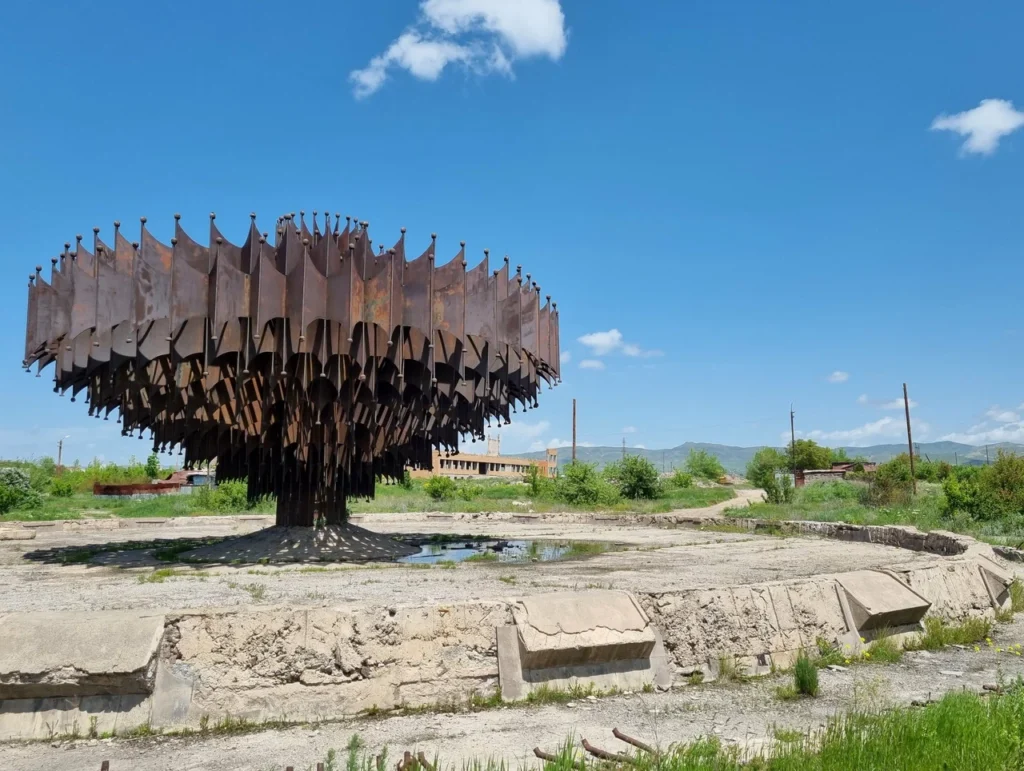
The Iron Fountain is one of Gyumri's most impressive and mysterious monuments, located on the grounds of the city's former Polytechnic University. This modernist masterpiece was created in 1982 by architect Arthur Tarkhanyan and, due to its unique appearance, is often compared to a spacecraft. Although the surrounding buildings were destroyed in the 1988 earthquake, the fountain remained standing, becoming a symbol of the city's resilience and unbroken spirit. Today, it is a favorite spot for tourists and photographers who come to witness this exceptional example of Soviet modernism.

Alexandra Spa And Oriental Bath

Alexandra Spa And Oriental Bath

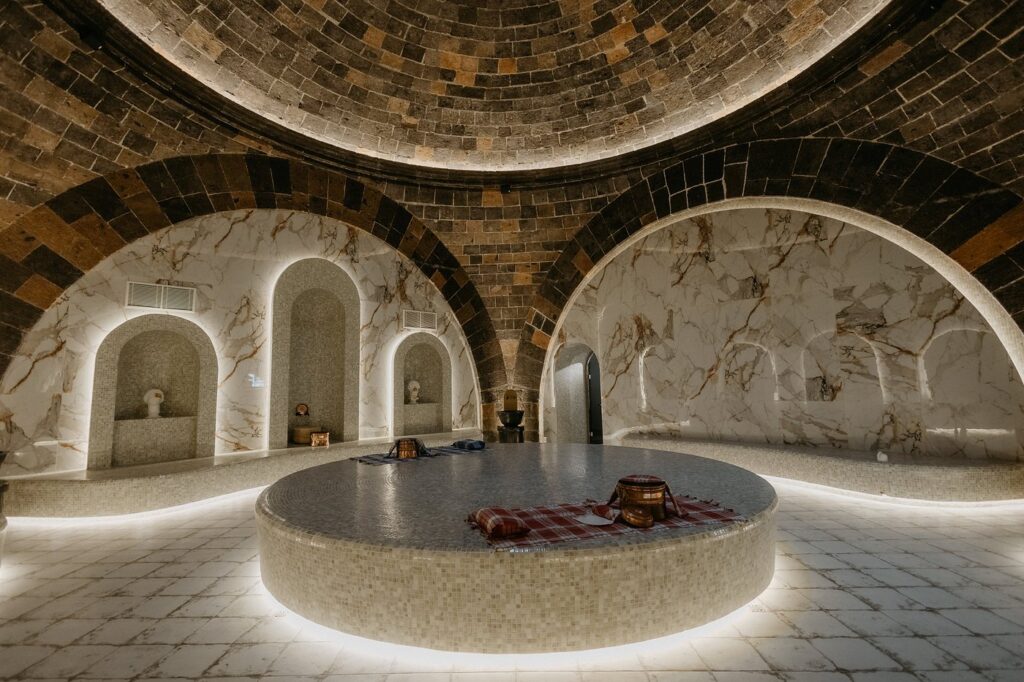
Discover the perfect balance of heritage and relaxation at Alexandra Spa Center. Our spa, established in the late 1860s in 19th century, offers premium services in the Caucasus region. Feel the heat in our Finnish, Russian, and Roman saunas, relax in our hamam, take a dip in the pool, or soak in the Jacuzzi. Men’s and women’s zones are designed separately to ensure your comfort and privacy. Ease your body with our Massage & Body Therapy options. Rely on our expert massage therapists from Bali. Pick the type of massage you like, such as Thai, Hot Stone, Bali, Sport massages, and even a relaxing Body Wrapping with Mud, among other treatments. Afterwards chill in our cozy rooms with herbal teas, juices, coffee, and Armenian drinks. At Alexandra Spa Center, we blend history and tranquility for an unforgettable experience.

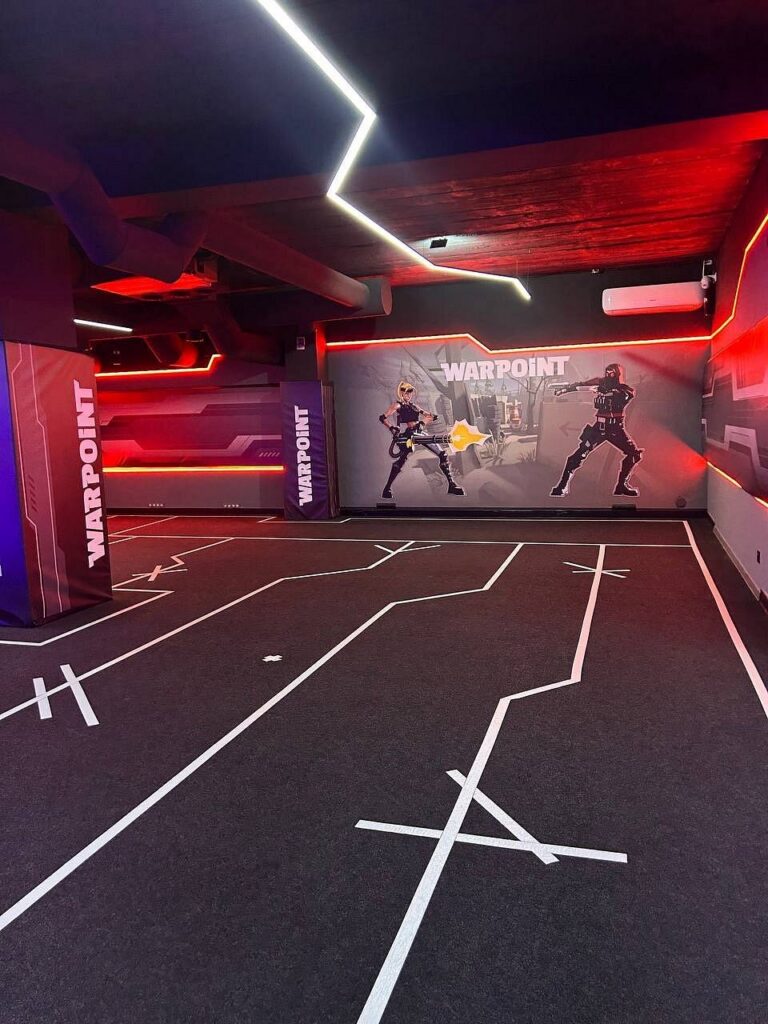
Warpoint Gyumri

Warpoint Gyumri

Warpoint VR Arena Gyumri is the first and only VR arena in Gyumri, offering unique shooter-style team games. Dive into thrilling adventures with cutting-edge virtual reality for an unforgettable group experience!