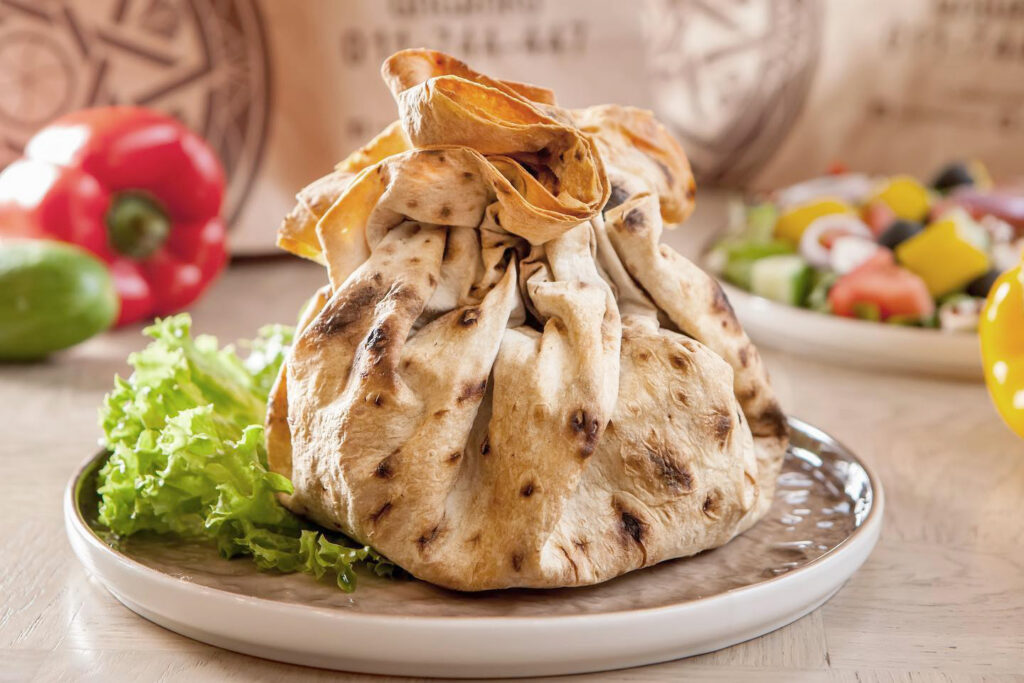
History & Tradition
- Gyumri khurchin is one of the unique dishes of traditional Armenian cuisine, passed down from generation to generation as an integral part of the family table. It was especially widespread in the Shirak region, where khurchin was prepared with simple yet filling ingredients, suitable for both everyday meals and festive occasions.
- Gyumri khurchin is not only a dish but also an expression of local culinary culture, reflected in its flavors, method of preparation, and history.
- This dish embodies the Gyumri way of life—simple yet rich in values, where taste and the culture of sharing are deeply important.
How It’s Served
- Gyumri khurchin served warm, allowing its rich flavors and aromas to fully unfold. It is usually presented as a main dish, accompanied by fresh herbs, seasonal vegetables, and traditional Armenian bread.
- In Gyumri, khurchin is often placed at the center of the table and shared among family members or guests, reflecting the local culture of hospitality and togetherness.
Cultural Significance
Gyumri khurchin holds a special place in the cultural identity of Gyumri and the Shirak region.
Traditionally prepared at home and shared at the family table, khurchin symbolizes unity, hospitality, and the importance of gathering together.