History & Tradition
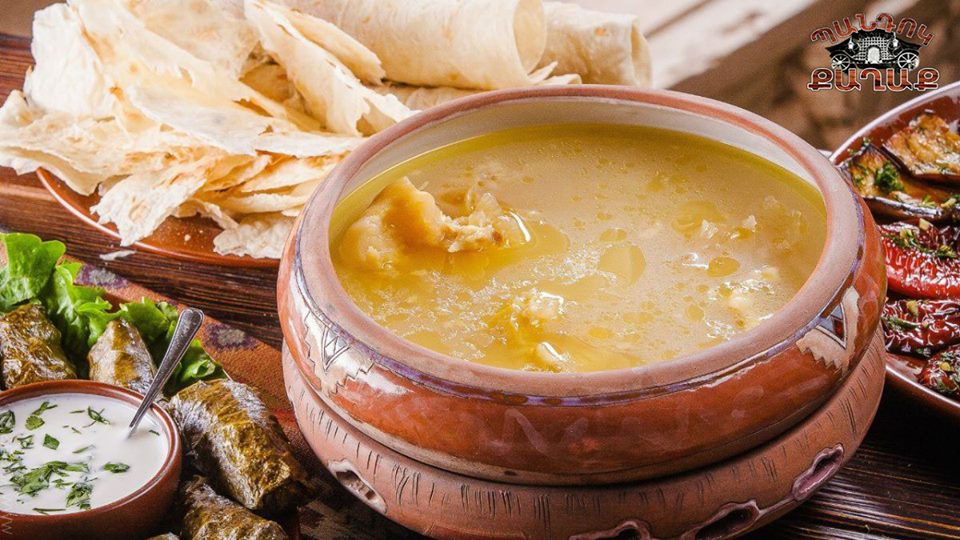
- The origins of Khash trace back to ancient pagan times following ritual sacrifices. Historically, it was a dish for the laboring class, providing the strength needed for a full day of hard work in the mountains. Over time, it transcended social boundaries to become a national treasure. Tradition dictates that Khash is strictly a cold-season meal, traditionally enjoyed during months that contain the letter "r" in their names, from September through April.
How It’s Served
- Serving Khash is a meticulous ritual. The broth arrives at the table unsalted and boiling hot. Each guest personalizes their bowl with plenty of garlic and salt. The experience is incomplete without mountains of dried lavash bread, which is crumbled into the broth until it becomes a thick porridge. It is accompanied by fresh radishes, assorted pickles, and mineral water. Often, a piece of fresh lavash is placed over the bowl to trap the steam, and the dish is traditionally eaten by hand using lavash as a scoop.
Cultural Significance
In Armenia, Khash is a powerful social institution. It is a morning celebration that brings families and friends together at dawn. The meal follows a specific etiquette, including three mandatory toasts. It represents more than sustenance; it is a symbol of brotherhood, warmth, and the enduring spirit of Armenian hospitality that has been passed down through generations.