History & Tradition
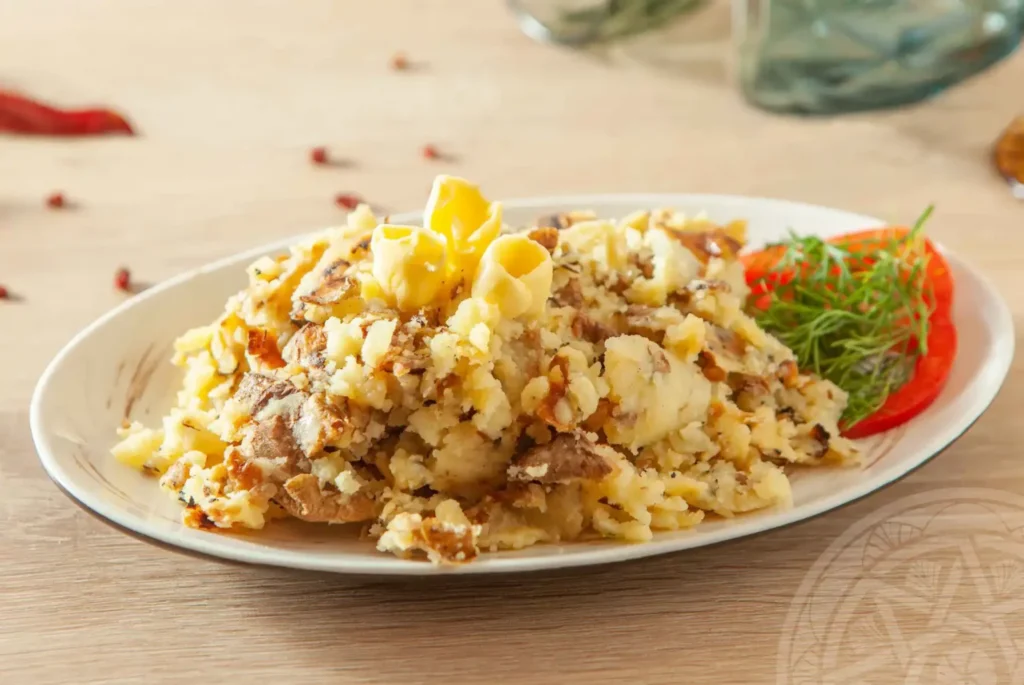
- In traditional Armenian village kitchens potatoes have long been a staple especially in rural areas where they were grown in abundance. The jmur style comes from old home methods where large pots of potatoes were boiled then hand-mashed with added fat or butter and simple spices to feed big families during cold months. It was a practical nourishing dish using minimal ingredients yet delivering maximum satisfaction often served alongside meat dairy or bread symbolizing family warmth and resourcefulness passed down through generations.
How It’s Served
- Served hot as a side to meat fish or poultry or as a standalone comforting meal for breakfast or dinner. Frequently accompanied by lavash or homemade bread with extra butter pats or garlic yogurt sauce on top sometimes sprinkled with fresh herbs like dill or thyme. It pairs wonderfully with pickled vegetables and feels especially satisfying when the butter gives it that golden rich finish.
Cultural Significance
Kartofil jmur represents the essence of Armenian home cooking simplicity turning basic ingredients into something deeply satisfying and hearty. It embodies rural abundance family togetherness and time-honored techniques handed down over generations. Today it appears in restaurants as a nostalgic homemade-style side and many consider it tastier and more soulful than regular mashed potatoes or fries loved at festive tables and everyday meals alike.